
Constraints Limiting Kenyan Women and Youth in Practicing Beekeeping: Future Prospects for Beekeeping in Kenya
Abstract
Beekeeping, or apiculture, is the management of bee colonies typically in man-made hives, by humans for the production of honey, wax, propolis, royal jelly, and venom. In Kenya, beekeeping is an emerging enterprise gaining economic momentum and popularity among many communities. However, it remains a male-dominated industry, largely due to cultural norms, management practices, and attitudes toward bees. The overall objective of this study was to identify the challenges that women and youth face in participating in beekeeping activities and to explore solutions that can help enhance their involvement and livelihoods within their communities. A review of various studies revealed that the main constraints limiting Kenyan women and youths from participating in beekeeping are cultural taboos, restrictive traditions, negative attitudes, limited access to financial institutions and loans, and inadequate technological capacity. Additional barriers include weak institutional frameworks, limited managerial and marketing skills, and a lack of training opportunities. The potential solution lies in developing and adopting modern technologies to enhance productivity and accessibility in apiculture. The study concludes that capacity building, together with technological intervention, through the introduction of modern bee hives, at affordable prices and market innovations, is essential to encourage greater participation of women and youth in apiculture, to support sustainable rural development.
Keywords:
Constraints, Kenyan women and youth, Beekeeping, Apiculture, ParticipationINTRODUCTION
Beekeeping involves managing honeybees for the production of honey, wax, propolis, royal jelly, venom, and other hive products (Chemwok et al., 2019). Compared with other farming activities, beekeeping requires minimal resources such as land, startup capital, and time, and can be practiced by all age groups with relatively little daily attention (Food and Agriculture Organization). According to Hunde (2025), beekeeping serves as a vital tool for fostering long-term development across many developing countries. The promotion of apiculture plays a crucial role in achieving several Sustainable Development Goals(SDGs), particularly those related to poverty reduction, food security, and biodiversity conservation. However, honey serves as a vital nutrient source and a key ingredient in the pharmaceutical industry across local, regional, and international markets(Zoccali et al., 2017). Global honey production has increased significantly due to the growing demand for natural and functional foods (USDA, 2022; FAO, 2024). The European Union accounts for approximately 22% of global honey production, ranking as the second-largest producer after China (Vida and Ferenczi, 2023). In Africa, Ethiopia leads in both honey and beeswax production (Fikru, 2015), followed by South Africa, Zambia, Egypt, and Guinea (African Union, 2019).
In Kenya, beekeeping remains largely male-dominated due to cultural norms and prevailing perceptions about bees (Mburu, 2015; Heckle et al., 2018). Similar to other East African countries, post-harvest beekeeping activities require considerable liquid capital, which limits the involvement of women and youth. In addition, cultural restrictions continue to discourage their active participation in the sector (Mwakatobe et al., 2016). Women and youth play a vital role in honey production, particularly in rural areas. However, despite women’s significant involvement in agriculture and forestry, beekeeping remains predominantly male-dominated, reflecting a persistently low level of gender inclusiveness (Kashumba, 2025). To enable Kenyan women and youth to benefit fully from apiculture, Nyaga (2016) emphasizes the need for comprehensive training in hive construction, colony management, harvesting, and honey processing to enhance the sector’s economic sustainability.
This review therefore examines the key constraints limiting women’s and youth participation in beekeeping in Kenya and explores modern technological innovations as potential solutions for greater inclusivity and long-term growth in the apiculture industry.
LITERATURE SCREENING AND SELECTION PROCESS
During this study, the titles, abstracts, and portions of the introductions of identified articles were initially screened for relevance and inclusion. A second, more detailed screening was then conducted on the methodology, results, discussion, and conclusion sections to ensure alignment with the study objectives. Articles were categorized based on relevance, and several exclusion criteria were applied. Studies were omitted if they were not written in English, conducted outside Kenya, published before 2015, required paid subscriptions for full-text access, or focused on unrelated topics. A total of 120 full-text articles met the eligibility criteria, focusing primarily on research conducted in Kenya and published in English between 2015 and 2025. These articles were downloaded and saved for further review. Subsequent screening and classification identified the following distribution: 5 case studies, 2 cross-sectional studies, 5 review papers, 3 qualitative studies, and 10 descriptive or survey-based studies. The selected literature examined beekeeping communities with emphasis on gender roles, women’s participation, cultural influences, attitudes, norms, and the adoption of beekeeping technologies.
CULTURAL BARRIERS IMPEDING WOMEN AND YOUTH INVOLVEMENT IN APICULTURE
Beekeeping in Kenya has traditionally been a male-dominated occupation (Mburu et al., 2017) and cultural norms continue to pose major obstacles to women’s and youth participation in apiculture (Mwakatobe, 2016). Although many regions across Kenya have favorable conditions for beekeeping, this potential remains largely underutilized (Caroll and Kinsella, 2013). Contributing factors include deep-rooted cultural restrictions, inadequate technical support, weak marketing systems, bee diseases, and environmental challenges such as drought and deforestation (Wambua et al., 2016; Honey Bee Health Coalition, 2019).
In many communities, traditional practices further discourage women’s participation. Conventional bark hives, for instance, require considerable physical strength and are often hung high in trees tasks that are culturally and physically inaccessible to many women due to modesty and safety concerns. Among the Kalenjin communities of Kenya’s Rift Valley, for example, women are traditionally prohibited from installing or maintaining hives. Moreover, honey harvesting typically involves extended periods away from home, conflicting with women’s household responsibilities(Jemase and Chesikaw, 2021).
Introducing modern beehives presents an effective solution to these constraints. Modern hives can be placed closer to homes and require far less physical labor, allowing women to engage in beekeeping without neglecting family obligations. This shift not only promotes inclusivity but also enhances household income and food security. Cultural beliefs such as taboos, inheritance customs, and prescribed gender roles further limit women’s and youths’ engagement in apiculture (Sibani, 2018; Gikunda et al., 2021) (Fig. 1). In contrast, countries like India have recorded higher youth participation in beekeeping enterprises (Verma et al., 2018). In Kenya, traditional customs often pass beekeeping knowledge from fathers to sons, excluding women from the learning process. In some communities, women are still forbidden from handling bees or climbing trees to install hives (Anoliefo et al., 2015).
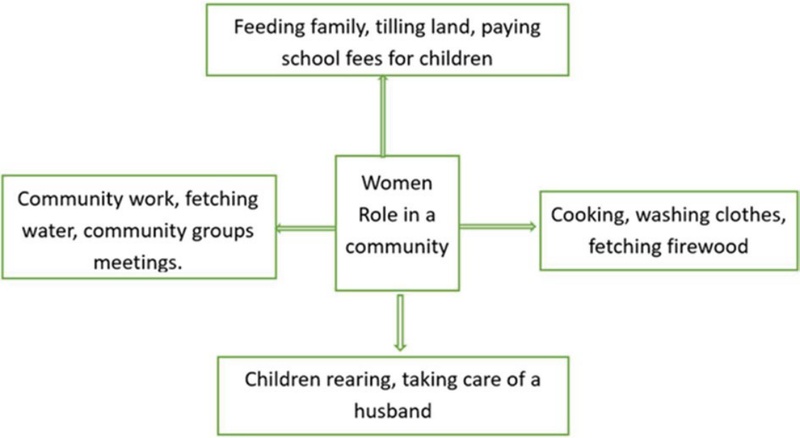
Conceptual framework illustrating the challenges faced by women in apiculture.
Furthermore, Gikunda et al. (2021) observed that in Meru culture, sexual abstinence was required before hive placement or honey harvesting, a practice that discouraged youth involvement. The aggressive nature of African honeybees (Apis mellifera) also limited participation, as traditional beekeeping was typically conducted by men at night more often with minimal clothing to allow free movement thus further deterring women. Across many Kenyan communities, women’s traditional domestic roles such as childcare, cooking, and home management leave little time for commercial activities like beekeeping (Fig. 1). Historically, the industry has thus been dominated by older men (Miriti, 2019). However, recent gender empowerment programs and modern hive technologies have begun to open opportunities for women’s participation (Mburu, 2015).
Fig. 1 illustrates the multiple domestic roles performed by women within the community, including child rearing, cooking, washing clothes, and other household responsibilities.
Women’s involvement remains constrained by fears of bee stings, insecurity near forested apiaries, and hive theft. Studies have also indicated that many young people prefer white-collar employment, perceiving traditional beekeeping as outdated and labor-intensive (Mungai and Ogot, 2012; Mburu, 2015). Limited knowledge and access to modern hives further hinder youth engagement in the apiculture industry.
Fig. 1 illustrates the multiple domestic roles that women perform within the community, including child rearing, cooking, washing clothes, and various other household duties. These responsibilities, which are often culturally assigned and time intensive, play a central role in shaping women’s daily routines and mobility. Within the conceptual framework, these domestic obligations are identified as a major structural barrier that restricts women’s effective participation in apiculture. The constant demands of household labor reduce the time available for hive management, training, market engagement, and other income generating activities. Consequently, women remain disproportionately constrained in accessing the full benefits of beekeeping, reinforcing gender gaps in productivity, income, and decision making within the apiculture value chain.
The purpose of the above figure is to generate information that broadens understanding, on Kenyan women role that hinders their participating in bee keeping.
FINANCIAL CONSTRAINTS
In many Kenyan communities, land ownership and thus access to title deeds remains concentrated among older men. Women and youth often lack collateral to obtain loans for starting beekeeping enterprises. Miriti (2019) noted that access to modern hives and marketing opportunities is influenced by demographic and financial factors, further marginalizing women and youth. Limited education among adult women exacerbates the gender gap, as financial literacy is essential for operating a beekeeping business. In the Maasai community, Miriti (2019) found that 91% of land titles were held by men and only 9% by women. Even widows with large farms lack ownership control and titles remain in their late husbands’ names. Consequently, financial and legal barriers limit women’s access to credit and equipment, while men retain control of key productive assets such as land and livestock.
MARKET ACCESS CONSTRAINTS FOR WOMEN AND YOUTHS
Beekeeping provides not only nutrition but also a significant source of income for Kenyan households. However, poor infrastructure especially impassable rural roads during rainy seasons, restricts market access. Women beekeepers, who must balance household chores and childcare, face additional difficulties transporting honey to the market, middle/brokers are also exploitative and this discourages women and youths from participating in bee keeping because it is difficult for your products to reach the customer without passing brokers/middle men.
Fig. 2 illustrates the major barriers faced by women and youths in accessing markets. A significant constraint is the low level of formal education among women, which limits their ability to obtain reliable information on prevailing market prices, product grading, and quality standards. Without access to accurate and timely information, many women are unable to negotiate fair prices or identify profitable market opportunities.
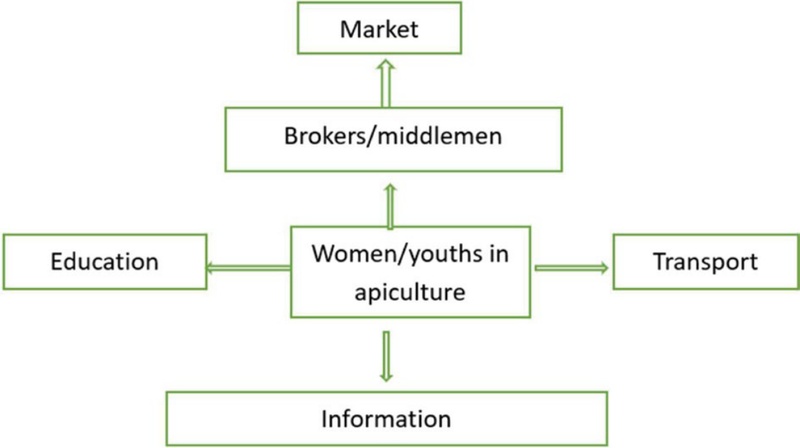
Conceptual frame women and youth’s challenges during marketing of bee products.
In addition, high transportation costs further restrict market participation. The majority of rural women and youths lack access to affordable and efficient transport services. As a result, some are compelled to rely on donkeys to travel long distances to market places. This mode of transport is slow, labor-intensive, and unable to carry large quantities of produce, thereby reducing both the volume and value of goods that can be traded. The combined burden of limited information access and inadequate transport infrastructure significantly reduces their competitiveness and participation in formal markets. Women also lack resources to rent market stalls and thus sell smaller quantities at lower prices(Wairimu, 2020).
Fig. 2 provides critical insights that broaden the understanding of the challenges faced by Kenyan women and youths during the marketing of bee products.
POTENTIAL SOLUTIONS AND FUTURE PROSPECTS
Youth and women often view beekeeping as unattractive due to reliance on outdated practices. Adoption of modern technologies remains low, hindered by limited funding, inadequate research, poor extension services, and high equipment costs(Njora and Yilmaz, 2022).
1. Formation of beekeeping groups
Mobilizing women and youth into beekeeping cooperatives has emerged as a key strategy for improving access to technical support, financial resources, and managerial training. Fig. 3 illustrates women and youth actively participating in structured beekeeping training sessions, reflecting their increasing involvement in apiculture development initiatives across Kenya. These trainings enhance participants’ technical competence in hive management, honey production, colony health, and value-addition practices, thereby strengthening both productivity and economic resilience. The formation of cooperatives further amplifies these benefits. Through collective organization, women and youth gain improved access to extension services, capacity building programs, and financial support mechanisms such as grants, revolving funds, and microcredit schemes. Cooperatives also provide shared platforms for knowledge exchange, mentorship, and peer learning, which are essential for sustaining adoption of modern beekeeping practices.
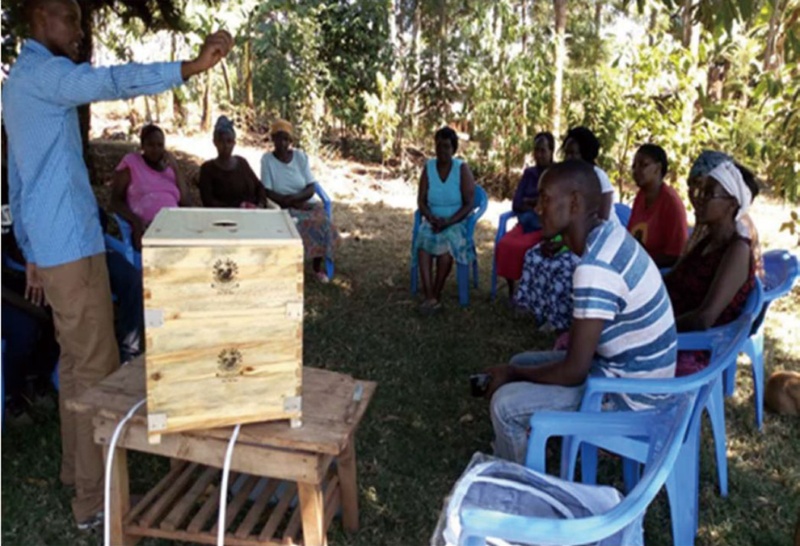
Youths and women participating in beekeeping training sessions.
Importantly, cooperative membership enhances bargaining power within the honey value chain. Organized groups can negotiate better market prices, engage in bulk sales, and establish stronger linkages with buyers, processors, and certification bodies. This collective strength is especially valuable for women and youth who often face structural constraints including limited land ownership, restricted mobility, and inadequate access to market information. Overall, the formation of beekeeping groups contributes significantly to building more inclusive, equitable, and sustainable apiculture value chains. By reducing barriers to participation and empowering women and youth with skills, resources, and market access, cooperative based approaches play a vital role in fostering rural development and improving livelihoods in Kenyan beekeeping communities.
Fig. 3 illustrates the active involvement of women and young people in apiculture training programs aimed at strengthening their technical capacity in hive management, honey production, and colony health. Such trainings play a critical role in empowering participants with practical skills that enhance productivity and support sustainable livelihoods. By mobilizing women and youth into organized groups or cooperatives, these initiatives also improve access to technical support, financial resources, and management training and ultimately promoting greater inclusion and resilience within the apiculture value chain.
2. Affordable technology and empowerment programs
Enhancing access to modern beekeeping technologies is essential for empowering women and youth in the apiculture sector. Establishing revolving funds or microfinance programs can make modern hives and related equipment more affordable, enabling small-scale beekeepers to adopt improved production methods. In addition, capacity-building initiatives that focus on financial literacy, cooperative management, and apiculture best practices can strengthen participants’ ability to manage and sustain their enterprises. Supporting women’s associations with modern beekeeping equipment and encouraging group-based management systems fosters shared accountability, enhances productivity, and promotes income stability. Such empowerment programs not only improve livelihoods but also contribute to greater inclusivity and resilience within the beekeeping community.
Fig. 4 presents a locally fabricated Langstroth beehive adapted to Kenyan conditions, showcasing innovations aimed at reducing production costs while maintaining efficiency. This modern design enhances colony management, improves honey harvest quality, and supports the adoption of sustainable apiculture practices among small scale beekeepers.
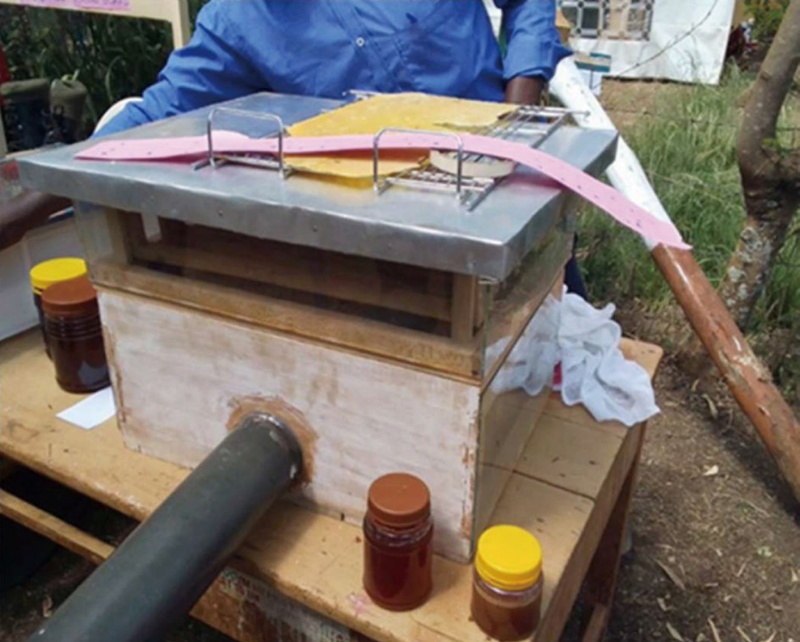
Kenyan modern Langstroth beehive developed through affordable technological innovation.
3. Subsidized modern hives
Modern beehives, such as the Kenyan top bar model, typically cost around KSh 8,000, compared to approximately KSh 1,000 for traditional log hives. This price difference presents a major financial barrier for many small-scale beekeepers. However, group ownership and cooperative models can significantly lower the individual financial burden by enabling shared investment and collective management. Such arrangements make it more feasible for women and youth to adopt improved technologies that enhance productivity and honey quality (Urban and Chlebo, 2024).
Fig. 5 shows the commonly used Kenyan Top Bar Hive (KTBH), which was distributed to youth by the Kenyan Government through the Constituency Development Fund (CDF) in Konoin Constituency, courtesy of Hon. Brighton Yegon. The hives were provided at affordable and subsidized prices, enhancing accessibility and encouraging youth participation in modern beekeeping.
The figure above shows the commonly used Kenyan Top Bar Hive (KTBH), which was distributed to youth by the Kenyan Government through the Constituency Development Fund (CDF) in Konoin Constituency, courtesy of Hon. Brighton Yegon. The hives were provided at affordable and subsidized prices, enhancing accessibility and encouraging youth participation in modern beekeeping.
CONCLUSION
Technological and market innovations which are key to increasing women’s and youth participation in apiculture can be achieved by introducing modern bee hives. For instance, Langstroth are more friendly to women and youths because it is easy to manage. Provision of modern harvesting materials and capacity building for value addition to bee products and practices through smart agriculture is recommended. Modern beehives that can be installed near households provide manageable, low-cost opportunities for income generation. Beekeeping not only improves economic resilience but also enhances food security, biodiversity conservation, and environmental sustainability. Income from beekeeping can help families invest in agriculture, education, and healthcare. Moreover, apiculture encourages responsible pesticide use and forest conservation, supporting both ecological balance and gender equality in rural development.
POLICY RECOMMENDATIONS
To strengthen women’s and youth participation in apiculture, targeted policy interventions are essential. Governments, development agencies, and local institutions should prioritize inclusive strategies that promote equal access to resources, training, and market opportunities.
First, integrating apiculture into national agricultural development programs can ensure consistent funding, research, and extension support. Establishing regional training centers focused on modern hive management, product diversification, and value addition would help equip beekeepers with practical, market-driven skills.
Second, gender-sensitive policies should address barriers that limit women’s involvement in beekeeping specifically access to land, credit, and equipment. Encouraging women-led cooperatives and youth-based enterprises can further enhance collective bargaining power and market reach. Lastly, collaborations between research institutions such as Kenya Agricultural and Livestock Research Organization (KALRO), NGOs, and private sector partners can accelerate technology transfer and promote sustainable innovations, including locally adapted hive designs and improved bee health management practices. Such coordinated efforts will foster a more inclusive, resilient, and economically viable apiculture industry in Kenya and beyond.
Acknowledgments
This study is supported by Korea-Africa Food and Agriculture Cooperation Initiative (KAFACI) 2025 young scientist research project of Rural development administration and also acknowledge the Kenyan government through the Kenyan Agricultural Livestock Research organization (KALRO) for granting me opportunity to attend this training. This study was funded by the RDA (PJ01759001).
References
- African Union. 2019. The inaugural report on the status of apiculture in Africa 2019: Opportunities and strategies for development of the sector. African Union, Inter-African Bureau for Animal Resources, Nairobi, Kenya.
- Anoliefo, G. O., P. A. Nwokeji and B. Ikhajiagbe. 2015. Influence of traditional taboo practices on natural resource conservation in Uli, Ihiala Local Government Area of Anambra State, Nigeria; sustainable community development. J. Environ. Sustain.4: 1-13.
- Chemwok, C. K., D. K Tuitoek and S. K Nganai. 2019. Factors influencing honey production in Marigat, Baringo County, Kenya. Int. J. Res. Innov. Soc. Sci. 3: 426-434.
-
Fikru, S. 2015. Review of bee and honey production in Ethiopia. J. Anim. Sci. Adv. 5: 1413-1421.
[https://doi.org/10.5455/jasa.20151019083635]

- Food and Agriculture Organization of the United Nations (FAO). 2024. FAOSTAT. https://www.fao.org/faostat/en/data/QCL/visualize, . Accessed 16 June 2024.
-
Gikunda, R. M., D. M. Ooga, I. N. Okiamba and S. Anyuor. 2021. Cultural barriers towards women and youth entry to apiculture production in Maara Sub-County, Kenya. Adv. Agric. Dev. 2: 73-85.
[https://doi.org/10.37433/aad.v2i2.113]
- Heckle, R., P. Smith, J. I. Macdiarmid, E. Campbell and P. Abbott. 2018. Beekeeping adoption: A case study of three smallholder farming communities in Baringo County, Kenya. J. Agric. Rural Dev. Trop. Subtrop. 119: 1-11.
- Honey Bee Health Coalition. 2019. Best management practices for hive health: A guide for beekeepers (1st ed.).
- Hunde, T. A. 2025. The potential and transformation of beekeeping for natural resource conservation and poverty reduction in the case of Ethiopia: A review. Int. J. Environ. Prot. Policy 13: 1-13.
-
Jemase, Y. C. and L. Chesikaw. 2021. Gender roles and women participation in beekeeping: A focus on Baringo South Sub-County, Baringo County. Adv. Sci. Humanit. 7: 32.
[https://doi.org/10.11648/j.ash.20210702.14]
- Kashumba, F. M. 2025. Gender inclusiveness in apiculture: Challenges and opportunities for women in honey production. J. Apic. Res. Dev. Stud. 14: 88-97.
- Mburu, P. D. 2015. Mapping of the honey value chain and analysis of changes in gender roles and factors influencing women empowerment among beekeepers in Kitui County, Kenya. Doctoral dissertation, University of Nairobi. University of Nairobi Digital Repository.
-
Mburu, P. D. M., H. Affognon, P. Irungu, J. Mburu and S. Raina. 2017. Gender roles and constraints in beekeeping: A case from Kitui County, Kenya. Bee World 94: 54-59.
[https://doi.org/10.1080/0005772X.2016.1275490]
- Miriti, L. C. 2019. Gender gaps in transfer of improved beekeeping: A case of the Maasai community in Trans Mara, Narok County, Kenya. Doctoral dissertation, Kenyatta University, Kenya.
-
Mungai, E. N. and M. Ogot. 2012. Gender, culture and entrepreneurship in Kenya. Int. Bus. Res. 5(5): 175-183.
[https://doi.org/10.5539/ibr.v5n5p175]
- Mwakatobe, A. R., J. A. Ntalwila, E. M. Kohi, N. Kipemba and C. Mrisha. 2016. Income generation promotes the participation of youth and women in beekeeping activities in western Tanzania. J. Entomol. Zool. Stud. 4: 718-721.
- Njora, B. and H. Yilmaz. 2022. Promoting youth engagement and employment in the agricultural sector in Kenya. Eur. J. Agric. Res. 6: 1-16.
- Nyaga, J. 2016. Empowering women and youth through apiculture in Kenya. Afr. J. Agric. Ext. Rural. Dev. 8: 215-223.
- Sibani, C. M. 2018. Impact of Western culture on traditional African society: Problems and prospects. J. Relig. Hum. Relat. 10: 56-72.
-
Urban, M. and R. Chlebo. 2024. Current status and future outlooks of precision beekeeping systems and services. Rev. Agric. Sci. 12: 165-181.
[https://doi.org/10.7831/ras.12.0_165]
- USDA Economic Research Service. 2022. Sugar and Sweeteners Outlook: June 2022. United States Department of Agriculture.
-
Verma, T. C., K. C. Meena, S. Aswal and D. K. Singh. 2018. Socio-personal and economic analysis of apiculture enterprise in Hadauoti region of Rajasthan. Econ. Aff. 63: 261-268.
[https://doi.org/10.30954/0424-2513.2018.00150.32]
-
Vida, V. and A. F. Ferenczi. 2023. Trends in honey consumption and purchasing habits in the European Union. APSTRACT 17(1).
[https://doi.org/10.19041/APSTRACT/2023/1/6]
- Wairimu, N. L. 2020. Assessment of the status of food control in the informal food markets in Nairobi, Kenya. Doctoral dissertation, University of Nairobi.
- Wambua, B. M., N. K. Musimba and E. Muli. 2016. Socioeconomic analysis of beekeeping technologies in Kenya: A case study of Kitui County. Int. J. Educ. Res. 4: 345-354.
-
Zoccali, P., A. Malacrino, O. Campolo, F. Laudani, G. M. Algeri, G. Giuntu and V. Palmeri. 2017. A novel GIS-based approach to assess beekeeping suitability of Mediterranean lands. Saudi J. Biol. Sci. 24: 1045-1050.
[https://doi.org/10.1016/j.sjbs.2017.01.062]